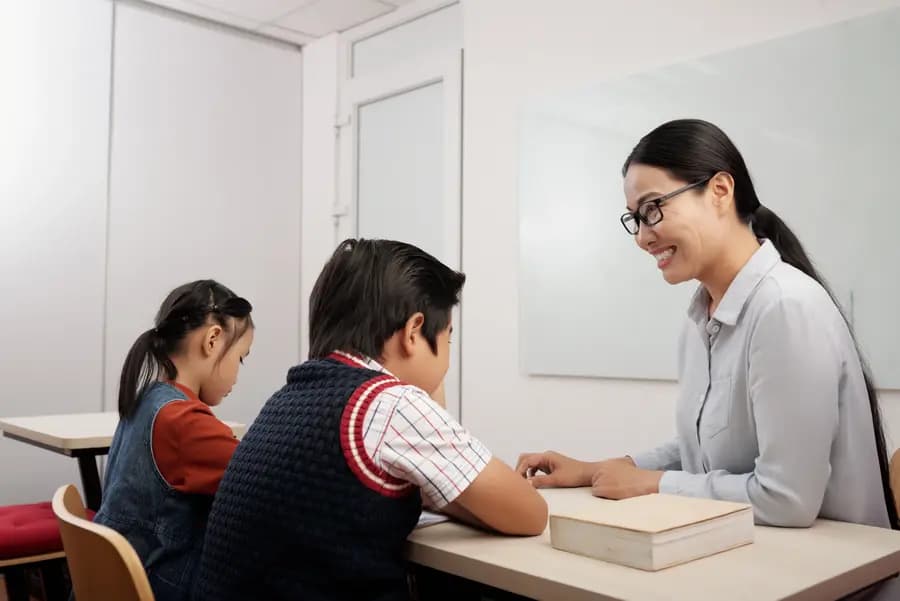
PSLE Chinese rewards children who use the language, not just study it. Reading a little every day, speaking without fear of mistakes, and writing regularly build the vocabulary and fluency that the papers reward. With a steady plan through P5 and P6, strong results are well within reach.
The short version
- PSLE Chinese is examined over three papers — Writing, Language Use & Comprehension, and Oral & Listening — graded on the AL1–AL8 scale.
- Daily reading and speaking build vocabulary and fluency faster than rote memorisation.
- Composition marks come from planning and a bank of good phrases — used naturally, not stuffed in.
- If your child freezes in oral or struggles with comprehension, that’s the usual signal targeted help pays off.
Understanding the PSLE Chinese papers
PSLE Chinese is set over three papers assessing writing, language use, comprehension, listening and speaking. Each subject is now graded by Achievement Level (AL1 to AL8), where AL1 is the top band. See the FAQ below for the current per-paper mark weightings.
PSLE Chinese papers breakdown
Paper 1: Writing
- Composition writing on a given topic
- Tests vocabulary, sentence structure and organisation
Paper 2: Language Use & Comprehension
- Multiple-choice questions on language use
- Comprehension passages with varied question types
Paper 3: Oral & Listening Comprehension
- Reading aloud and a video-based conversation
- Listening comprehension based on audio clips
2026 PSLE Chinese exam timetable
| Subject | Paper | Date | Time |
|---|---|---|---|
| Mother Tongue Languages | Oral | Thu, 13 Aug 2026 | 0800–1330h |
| Listening Comprehension | Tue, 15 Sept 2026 | 0900–0935h | |
| Paper 1 | Mon, 28 Sept 2026 | 0815–0905h | |
| Paper 2 | Mon, 28 Sept 2026 | 1015–1155h |
A 12-month PSLE Chinese study plan
- 1
P5 Term 4 – P6 Term 1 · Foundation
- Strengthen vocabulary and character recognition
- Secure basic sentence structures and common phrases
- Build a reading habit with Chinese storybooks
- Work on pronunciation and everyday oral expression
- 2
P6 Term 2 · Skill-building
- Finish the P6 syllabus
- Start topical practice with past-year questions
- Learn composition planning and comprehension technique
- Time each paper and log recurring weak areas
- 3
P6 Term 3 to Prelims · Application
- Daily practice at PSLE standard across the papers
- Attempt full papers under real exam timing
- Rehearse oral conversation across a range of topics
- Review mistakes and consolidate vocabulary and grammar
- 4
Post-Prelims to PSLE · Consolidation
- Target the weak areas surfaced by the prelim analysis
- Keep reading, writing and speaking warm daily
- Hold a steady routine — rest and calm matter now
Writing
Composition & language use
Study strategy
- Build a bank of good phrases and idioms, and use them naturally
- Plan the composition before writing — a clear beginning, middle and end
- Practise a range of topics so no prompt feels unfamiliar
- Reread to fix character, grammar and punctuation slips
Comprehension
Reading & answering
Study strategy
- Read widely to lift reading speed and comprehension
- Identify keywords and the main idea of each passage
- Match the answer style to the question type
- Support answers with evidence lifted from the passage
Oral & listening
Speaking, reading aloud & listening
Study strategy
- Read aloud daily to improve pronunciation and fluency
- In conversation, give an opinion and then a reason and example
- Practise speaking across a range of everyday topics
- Take quick notes while listening for the detail each question needs
Study techniques that work
Habits that lift PSLE Chinese marks
Flashcards:
Use spaced flashcards to make vocabulary and characters stick.
Phrase bank:
Collect vivid phrases and idioms with an example sentence, then reuse them in writing.
Role-play:
Rehearse oral conversation with a partner or tutor so speaking feels natural.
Daily journal:
Write a few lines in Chinese each day — small, regular practice beats occasional cramming.
Paper-by-paper exam strategy
Paper 1 (Writing)
- Read the topic and pictures carefully before planning
- Spend a few minutes outlining the story arc
- Use varied vocabulary and sentence patterns naturally
- Leave time to reread and correct characters
Paper 2 (Language Use & Comprehension)
- Use context to choose language-use answers
- Read the questions before the comprehension passage
- Answer with evidence from the text
- Pace yourself so every section gets attention
Paper 3 (Oral & Listening)
- Read aloud with clear pronunciation and expression
- Give opinions with a reason and a personal example
- Take brief notes during the listening clips
- Stay calm and speak in full sentences
Common mistakes to avoid
Where PSLE Chinese marks slip away
- Incorrect character writing
- Grammatical errors
- Weak composition structure
- Misreading comprehension questions
- Poor time management
- Inaccurate pronunciation in oral
- One-word conversation answers
- Losing focus during listening
- Leaving questions blank
- Messy handwriting
A realistic weekly schedule
Recommended weekly rhythm (Primary 6)
School days
- 15–20 minutes of Chinese reading
- Finish and check homework
- Add new words to the phrase bank
- Read a short passage aloud
Weekends
- One to two timed practice papers
- Review and reclassify mistakes
- Draft one composition and edit it
- Rehearse oral conversation topics
Essential PSLE Chinese resources
Recommended series
- Structured PSLE Chinese practice papers
- A thematic vocabulary and model-composition guide
Practice materials
- PSLE past papers (last 5 years)
- Top-school preliminary examination papers
- Topical comprehension and cloze practice
Reading materials
- Age-appropriate Chinese storybooks
- Children’s newspapers and magazines
- Age-appropriate Chinese audio and video clips
When to consider PSLE Chinese tuition
Consider PSLE Chinese tuition if your child:
- Struggles with character recognition and writing
- Finds grammar and sentence structure difficult
- Needs help with composition and oral skills
- Loses comprehension marks despite knowing the words
- Is aiming for AL1–AL2 and wants steady feedback
- Benefits from a patient, supportive learning environment
Choose PSLE Chinese tutors who: are strong native or near-native speakers, know the current syllabus and AL scoring, teach composition and oral technique rather than rote drilling, and make learning Chinese engaging for a primary-aged child.
PSLE Chinese FAQs
How are PSLE Chinese marks broken down?
Tuition-industry guides put PSLE Chinese marks at roughly 200 across three papers: about 40 for Paper 1 Writing, about 90 for Paper 2 Language Use & Comprehension, and about 70 for Paper 3 (Oral 50 plus Listening 20). SEAB's official syllabus document is the definitive source for exact current weightings.
Continue your revision
- PSLE Mathematics guideHeuristics, model drawing and Paper 2 problem sums.
- PSLE English guideComposition, comprehension and oral across both papers.
- PSLE Science guideOpen-ended answering technique and the themes examined.
- primary school tuition in SingaporeFind a primary tutor from P1 through to PSLE.
- how to study for PSLE MathsAll 100 marks booklet by booklet, and the method mark pupils throw away.
- how to study for PSLE ScienceWhy 60 of the 100 marks are multiple choice, and how Booklet B scores.
- how to study for PSLE EnglishWhy Oral is 40 marks in ten minutes, and where Paper 2 hides its marks.
- how to study for PSLE ChineseWhy 口试 is a quarter of the grade, and the dictionary you may bring.
- Chinese tuition in SingaporeMother tongue support from primary through to O-Level.
- tuition rates in SingaporeWhat tutors charge by level and experience, with no agency fee.